
It felt like standing over thin ice and hearing the first crack beneath my feet.
Elena moved closer.
“Mr. Moretti…”
I turned away from her.
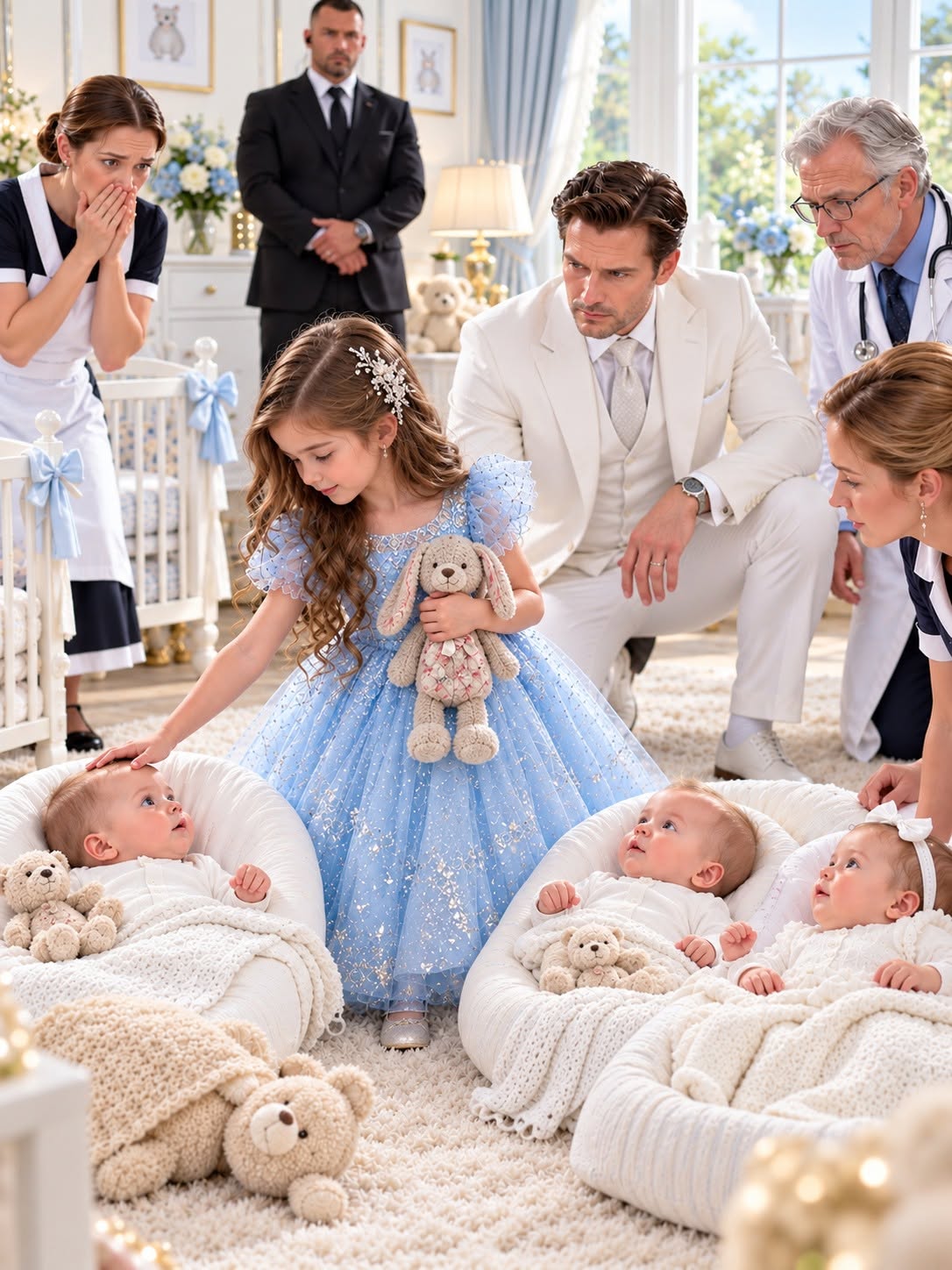
Above the cribs hung three framed watercolor paintings Isabella had personally selected before the babies arrived.
A fox beneath the moon. A bear beside a river. A rabbit sleeping beneath a tree.
She had spent weeks designing this nursery. She had debated decorators over different shades of cream. She had commissioned the carved cribs from an artisan in Vermont. She had laughed when I complained that an infant had no need for hand-painted drawer knobs imported from France.
I could still remember her response.
“They’re not for the babies.”
“What?”
“They’re for me. The babies won’t notice. I will.”
I kissed her forehead and told her she was impossible.
Now I studied the nursery as though I were seeing it for the first time.
“The nursery is the key,” I said.
Marco nodded.
“Because of what existed here before the babies.”
Elena frowned.
“This room?”
“You’ve worked in this house longer than anyone else currently employed here,” I said. “What was this room before?”
She shook her head.
“When I began working here, it was a guest room.”
“How long ago?”
“Seven years.”
Marco surveyed the room.
“Original estate plans.”
“I have them downstairs.”
“No,” I said.
They both turned toward me.
“I have copies downstairs. The originals are kept inside the library safe.”
Marco understood immediately.
“Isabella could access them?”
“She had access to everything.”
For the first time in almost a year, speaking those words brought something besides pain.
They brought questions.
Hundreds of questions.
Isabella had known my passwords.
My accounts. My schedule. My enemies.
She could enter every room in the house, every office, every vehicle.
I had never intentionally hidden anything from her.
At least, I believed I hadn’t.
And now I had to consider the possibility that she had concealed an entire second existence from me.
I looked down.
Nora’s eyes were open.
She stared upward with that serious, unfocused expression babies sometimes carried, almost as though they understood something enormous but lacked the language to explain it.
I gently brushed my thumb across her cheek.
“You’re safe,” I whispered.
The promise meant as much for myself as it was for her.
Then Sophie spoke.
“The lady sings here.”
Every adult turned toward her.
The color drained from Elena’s face.
“Sophie?”
The little girl pointed toward the wall.
I stared at her.
“What lady?”
Sophie hugged the remains of her doll.
“The pretty lady.”
Elena quickly crouched beside her.
“Sophie, sweetheart, what are you talking about?”
“The lady in the picture.”
“What picture?”
Sophie pointed toward the bedside table.
A silver photograph frame stood there.
Isabella.
The photograph had been taken during the fifth month of her pregnancy, laughing into the wind at our summer home in Wisconsin.
Sophie walked over and tapped the glass.
“Her.”
For a moment, I forgot how to breathe.
“You’ve seen Isabella?”
Elena placed both hands on her daughter’s shoulders.
“Sophie, please tell the truth.”
“I am.”
“When?”
The child appeared confused by the sudden intensity surrounding her.
“At nighttime.”
A cold silence filled the nursery.
“How many times?” I asked.
Sophie shrugged.
“Lots.”
Elena stood suddenly.
“That’s impossible. She must mean a dream.”
Sophie frowned.
“No. Dreams are when the rooms move.”
Marco looked toward me.
I carefully placed Nora into her crib. Then I lowered myself onto one knee until I was level with Sophie.